Royal Society for the Protection of Birds
Silent SpringThe Royal Society for the Protection of Birds is presented in Silent Spring as both a recipient of urgent field reports and a participant in documenting the consequences of pesticide-treated seed. In the spring of 1960, as dead birds were reported across Britain, the Society joined other wildlife organizations in gathering evidence. Its work helped turn scattered observations into a record of the scale of the losses, while the scarcity of analytical facilities exposed how difficult it was to establish their causes.
Reports of bird deaths
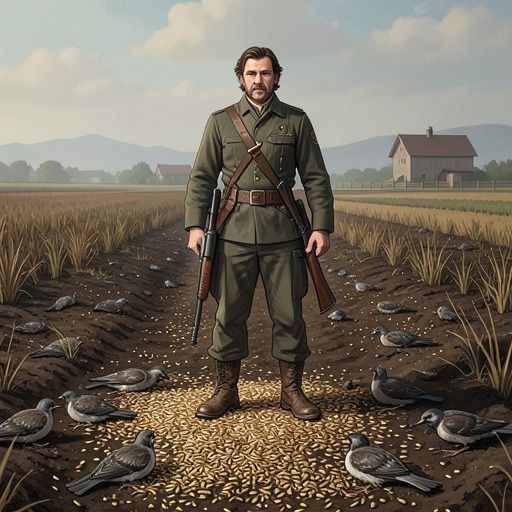
In the spring of 1960, a deluge of reports about dead birds reached British wildlife authorities and organizations, including the Royal Society for the Protection of Birds. The reports followed a change in seed treatment: around 1956, insecticides such as dieldrin, aldrin, or heptachlor had begun to be added to fungicide dressings to combat soil insects. The account connects this altered practice with a worsening situation for birds.
Reports conveyed the losses through local observations. One landowner in Norfolk described numerous dead birds, including small birds, and said that pairs of partridges had been found dead together. The Society's significance in this episode lies in its place within a wider network receiving and responding to reports from people who witnessed losses on the ground; the evidence does not portray it as the sole source of those reports.
Recording the scale of loss
The Royal Society for the Protection of Birds joined the British Trust for Ornithology in a report listing approximately 67 bird kills from the spring of 1960. The list was explicitly incomplete, so it represented only part of the destruction recorded that season. Of the 67 listed kills, 59 were attributed to seed dressings and eight to toxic sprays. The distinction made the seed-treatment route the dominant identified cause in this particular accounting, without suggesting that the list captured every affected bird or incident.
A further wave of poisoning followed in the next year. The recurrence gave the reports a significance beyond an isolated season: the book presents continuing bird deaths after the use of insecticides in seed treatment had become established. The Society's role in the joint record therefore connects local reports to a broader pattern of repeated wildlife loss.
Limits of investigation
The capacity to test dead birds for pesticide residues was sharply limited. The account states that only two chemists in the country could conduct the analyses: the government chemist and a chemist employed by the Royal Society for the Protection of Birds. The Society was thus not only receiving reports and contributing to a joint tally; it also provided one of the country's very few sources of analytical expertise in this investigation.
Witnesses described large fires on which bird bodies were burned, while efforts were also made to collect carcasses for examination. Among the birds that were analyzed, all but one contained pesticide residues. That result offered concrete evidence of exposure in the examined specimens, but the small number of analysts and the incomplete collection of bodies constrained how comprehensively the episode could be investigated. The contrast between extensive reported deaths and scarce testing capacity is central to the book's account of the Society's work.
Institutional significance
Elsewhere, Silent Spring describes the Society as part of the scientific and conservation community involved in responding to pesticide-related wildlife loss. The book argues that citizens faced a dilemma: conservationists and many wildlife biologists considered losses severe, sometimes catastrophic, while the public record and resources for research did not always make those losses easy to measure. The Society's reports and analytical work helped make the evidence more visible, but they also reveal the institutional limits under which wildlife damage was assessed.
The book's wider discussion contrasts the continuing flow of money for chemical control with the scarcity of funds for research on wildlife and insecticides. In that setting, the Society's participation mattered because documenting the effects required both field reports and residue analysis, not simply a record that chemical-control programs had been carried out. Its account of bird deaths contributes to Silent Spring's broader examination of how environmental evidence is gathered, what institutions can verify, and how pesticide consequences become part of public understanding.